






The Hamiltonian of a semiconductor crystal has the translation symmetry
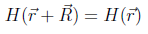
with  being a reciprocal lattice vector.
The Bloch theorem states that the wavefunctions have two “good” quantum numbers, the band index n and a reciprocal vector  such that the wavefunctions of the crystal may be written as:
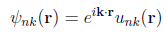
where  exhibits the periodicity of the crystal.
It may also be written as:

Proof of Bloch’s theorem
Translation operator

If R belongs to the Bravais lattice, the operator will commute with the Hamiltionian
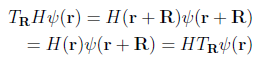
and therefore
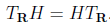
These two operators form a common set of commuting observable, we can therefore write the wavefunctions using eigenfunctions of both:

Consid´erons maintenant les propri´et´es de c(R)
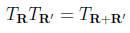
et donc

To simplify somewhat the notation, ai with i = 1, 2, 3 the basis vectors of the primitive Bravais lattice, and bi the basis vector of the reciprocal lattice. We can always define (because c(ai) is always normalized to unity:
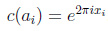
If now R is a translation of the Bravais lattice, it can be written as

then,
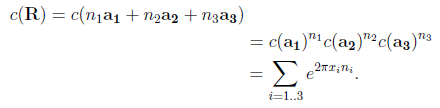
Using the orthogonality relations between the direct and reciprocal basis vectors, written as
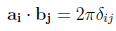
Considering the product between the vector R of the real space and the vector k of the
reciprocal space, written in the basis of the bi:
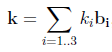
and then

It was in fact the result we had obtained for c(R), that was written as:

setting naturally xi = ki. The wavefunctions may well be written as:

that is one of the equivalent formulations of the Bloch theorem.