
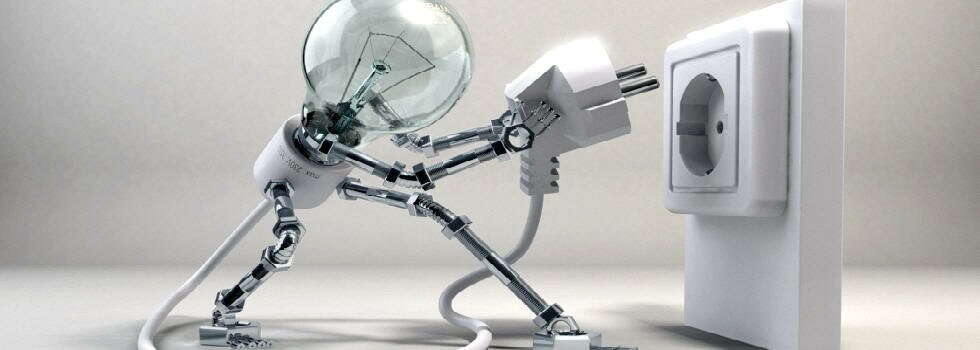
Supercapacitors could help electric car charge in a few minutes
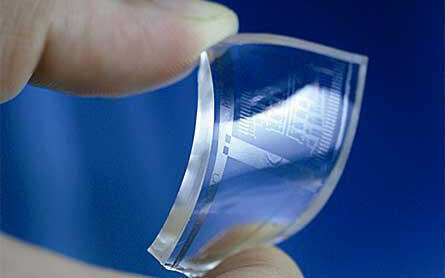 These are high performance supercapacitor electrodes. Left: field emission scanning electron microscope and transmission electron microscope micrographs; Right: sectional view of single hybrid nanostructure.
Read more: Supercapacitors could help electric car charge in a few minutes
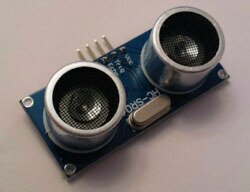
PVDF Piezoelectric sensor
PVDF Piezoelectric sensor is an interesting, low-cost sensor that doesn’t need much processing to use, and has some unique characteristics.
The sensors looks like a small strip of plastic, and can be used for detecting movement or vibrations even into ultrasound. Such devices can help sense in many practical, real-world scenarios. They are extremely sensitive, low cost and easy to use.
LTC nano-power buck-boost DC/DC
What are the key needs of an Energy Harvesting (EH) power supply? Well, first of all, battery redundancy power needs to be available at times when the ambient power is not available. Of course, we want to extend battery life by harvesting ambient energy from thermal, vibration, solar, etc. To make the front end of our power supply more versatile, it would be useful to be able to convert both AC (piezo, magnetic, etc.) or DC (solar) energy transducers with a fairly wide voltage range and also to have an input prioritizer that could decide whether to use the energy harvesting input or the battery input.
A synchronous buck-boost would make a versatile power converter, and low quiescent current is a plus. Keeping the output regulated would be important when transitioning between ambient and battery power and vice-versa. A good, solid current output capability with possibility of different selectable output voltages would top off the wish list.
The LTC3330 does all of the above.
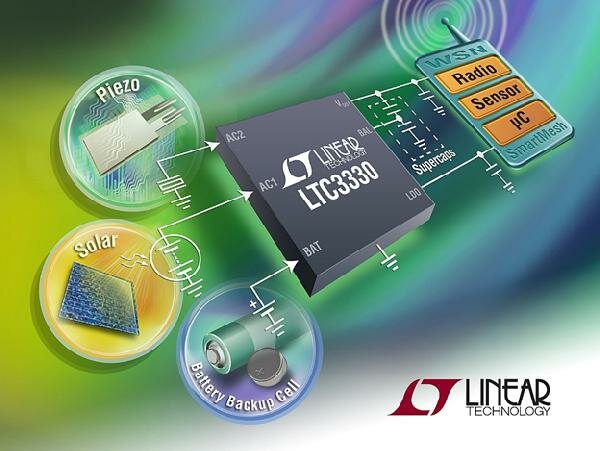
Linear Technology announced the LTC3330, a complete regulating energy harvesting solution that delivers up to 50mA of continuous output current to extend battery life when harvestable energy is available. The IC requires no supply current from the battery (Iq=0) when providing regulated power to the load from harvested energy and only 750 nA operating when powered from the battery under no-load conditions.
The regulator integrates a high voltage energy harvesting power supply, plus a synchronous buck-boost DC/DC converter powered by a primary cell battery to create a single non-interruptible output for energy harvesting applications such as those in wireless sensor networks.
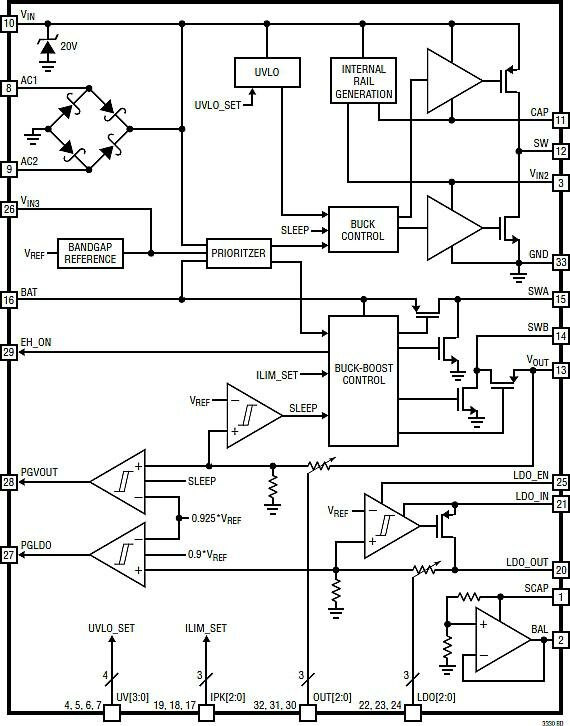
A comprehensive block diagram shows the high level of integration in this power supply
The energy harvesting power supply, consisting of a full-wave bridge rectifier accommodating AC or DC inputs and a high efficiency buck converter, harvests energy from piezoelectric (AC), solar (DC) or magnetic (AC) sources. The primary cell input powers a buck-boost converter that operates from 1.8V to 5.5V at its input when harvested energy is not available to regulate the output whether the input is above, below or equal to the output. The IC automatically transitions to the battery when the harvesting source is no longer available.
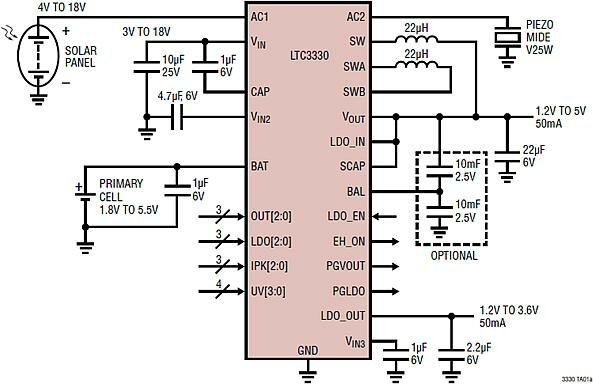
A typical application diagram
The device’s energy harvesting inputs operate from a voltage range of 3V to 19V, AC or DC, making it ideal for a wide array of piezoelectric, solar or magnetic energy sources. Its input under-voltage lockout threshold settings are programmable between 3V and 18V, enabling the application to operate the energy harvesting source at its peak power transfer point. Other features include programmable DC/DC nd LDO output voltage post-regulator for powering a microcontroller, buck-boost peak current limits, super-capacitor charger/balancer and an input protective shunt (up to 25mA at VIN >20V).
Zinc oxide materials show promise as piezoelectric nanogenerators
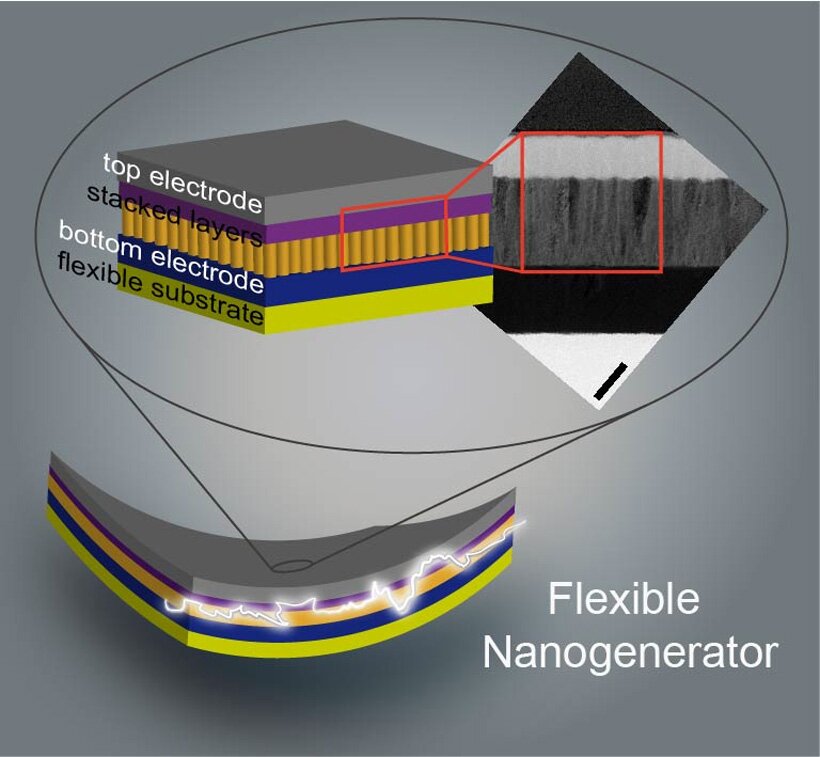 Researchers at the Korea Advanced Institute of Science and Technology (KAIST) have explored how the attractive physical features of zinc oxide (ZnO) materials could be more effectively used to tap into abundant mechanical energy sources to power micro devices.
The KAIST team discovered that inserting aluminum nitride insulating layers into ZnO-based energy harvesting devices led to an improvement of the devices performance which will help to make wearable electronics that are flexible, sustainable and powered by ambient renewable energy.
Read more: Zinc oxide materials show promise as piezoelectric nanogenerators
Laser project 3-D display
A team of researchers from Japanese firm Aerial Burton have showed off focused pulse lasers with the ability to project a 3-D display in mid-air, even during daylight. Unlike other holographic projectors we’ve seen, it doesn’t require fog or steam to display the image and can be displayed using just air as the medium.
The big lie about LED lighting
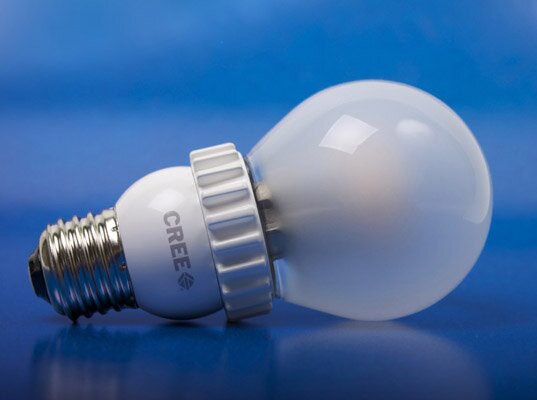 I've had it with LED lamps. The world has been told that LEDs are the future, in part because they are economically the right form of long-term lighting, and there are environmental benefits as a great aside. Well, maybe the environmental argument is true, but the economical one is not.
My wife has converted a substantial amount of our home lighting, as well as our holiday decoration lighting, to LED bulbs. Despite all this investment, I have yet to experience the primary benefit of long life. This made me sit down recently and ask myself why.
Microsoft's hologram glasses change the way you see the world
 Microsoft's hologram headset is real, is absolutely coming to market, according to the company, and, for the most part, does what it says it does: creates interactive holograms in a user's view of the real world.
Early builds of the HoloLens device allowed me to walk on the surface of Mars and talk to a NASA scientist about the formation of the rocks there. A Microsoft employee used Skype and the headset to show me, with diagrams layered over my view of the wall in front of me, how to wire a light switch. I watched someone build a 3D model of a toy in real time and, finally, had a chance to play a take on Minecraft that involved digging holes through coffee tables and blowing away a section of a wall to reveal the lava-scape behind it.
Read more: Microsoft's hologram glasses change the way you see the world